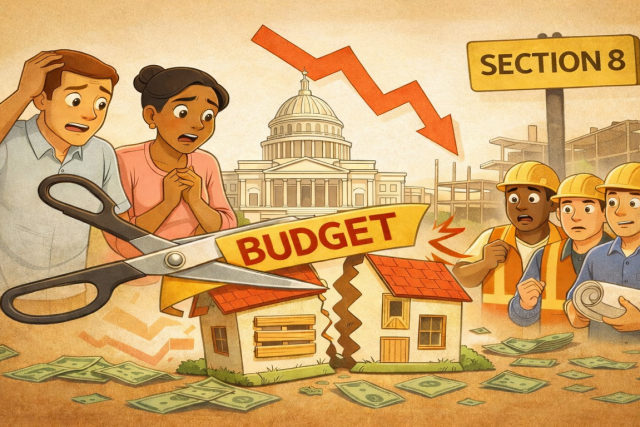


This week has brought a blend of promising updates and significant concerns regarding affordable housing, Section 8, and housing choice vouchers. Here’s a straightforward overview of the key developments and their relevance for renters, voucher users, and communities.
1. Where homes remain relatively affordable
Despite the ongoing high home prices nationwide, some regions still offer significantly lower costs. According to a Parade report on the most affordable states to purchase a home, areas like West Virginia stand out for their much lower median home prices compared to the national average.
This is particularly beneficial for renters aspiring to buy a home in the future. It indicates that in certain locales, homeownership can still be attainable for lower-income families, especially when coupled with local support or first-time buyer initiatives.
2. Hope for ending a disruptive shutdown affecting housing programs
The ongoing government shutdown has created distress for many organizations that administer Section 8 housing choice voucher programs and other rental assistance efforts. There is renewed optimism, as highlighted in an NLIHC update regarding a potential Senate proposal to end the unprecedented shutdown and safeguard affordable housing programs.
If the shutdown concludes, it will stabilize landlord payments and lessen the likelihood that families with vouchers will fall behind on their rent due to delays in federal funding.
3. Challenging misconceptions about affordable housing
Affordable housing often meets significant resistance from local residents, frequently stemming from fears and misinformation. An article from the Urban Land Institute addresses and disproves common myths regarding affordable housing developments, asserting that these homes do not inherently lead to increased crime, diminished property values, or community harm.
Dissecting these inaccuracies is vital. When communities realize that affordable housing can be well-managed, secure, and beneficial for neighborhoods, it paves the way for constructing the dwellings that low-income families desperately need.
4. Public backing for new housing and homelessness initiatives
Across various cities and states, voters have demonstrated their support for new funding and strategies aimed at combating homelessness and expanding affordable housing. The National Low Income Housing Coalition outlines this in a recap of ballot measures that enhance affordable housing and homelessness initiatives.
These victories encompass increased funding for housing projects, alterations to zoning regulations, and policies designed to facilitate the construction or preservation of low-cost homes. This reflects a public desire for practical solutions rather than mere rhetoric.
5. Debates over tenant-rights legislation in Michigan
A new tenant-rights proposal in Michigan has sparked discussions about how to best safeguard renters without jeopardizing housing supply. A viewpoint in the Lansing State Journal discusses the potential that the bill could exacerbate the affordable rental housing shortage, detailing how tenant protections might intensify Michigan’s housing challenges.
The concern is that if owning and managing rental properties becomes overly risky or costly, some landlords may opt to sell or exit the market, further reducing the availability of homes for low-income families.
6. Understanding the factors behind housing unaffordability
An insightful analysis by Fox Business offers a clear examination of the top three factors contributing to housing unaffordability in the U.S.. The article identifies high construction expenses, restricted building efforts, and low inventory as primary reasons for escalating prices.
For those relying on housing choice vouchers or awaiting a Section 8 slot to become available, these market conditions complicate the search for units that comply with program regulations while also matching payment standards.
7. New Haven launches 150 affordable housing units
In Connecticut, there’s positive news as New Haven has commenced the construction of a new affordable housing development. Local coverage from WFSB regarding New Haven breaking ground on a 150-unit affordable housing endeavor reveals that these homes will be allocated for lower-income residents.
Introducing real units into the marketplace represents a direct strategy to tackle soaring rents. This project exemplifies the effective collaboration of policy, funding, and local leadership.
8. Federal plans for significant cuts to Section 8 vouchers ignite concern
On a more concerning note, there are alarming reports regarding federal support for rental assistance. A report discussing Washington’s intention to implement substantial cuts to Section 8 housing vouchers indicates that the government is contemplating major reductions in funding for these important resources.
If these cuts are realized, fewer families will receive necessary assistance, waiting lists could grow longer, and many renters might struggle without support in a highly competitive housing market.
9. Rising costs and policy shifts challenge builders, yet growth is anticipated
Developers are confronting numerous pressures as well. A TD Bank survey on how costs and policy changes challenge affordable housing efforts while growth is still predicted for 2026 reveals that many builders encounter heightened expenses and complexities in construction.
Nonetheless, many industry professionals remain optimistic that additional affordable housing projects will advance in the coming years, particularly if financial conditions and local regulations improve.
10. Post-shutdown guidance for service providers
The shutdown also impacts organizations dedicated to addressing homelessness and managing supportive housing. The National Alliance to End Homelessness outlines this in a blog post detailing what everyone should know about the upcoming NOFO after the shutdown.
This information is critical for service providers and housing agencies as it lays out how to navigate funding applications and upcoming timing changes, which are essential for sustaining shelters and supportive housing initiatives.
11. A $169 billion challenge to preserve public housing
Public housing plays a vital role in providing deeply affordable housing, yet a significant portion is aging and falling into disrepair. A thorough examination of this issue in a Public Enterprise article on the $169 billion challenge of preserving America’s public housing indicates that substantial investments are necessary just to ensure that existing units remain safe and livable.
If this funding is not secured, we risk losing many public housing units, thereby exacerbating the housing crisis for the most economically vulnerable households.
12. New affordable units open for applications in Boston
In Boston, there’s good news for renters: new units have opened for applications. A piece from DotNews about affordable housing applications for The Homes at Old Colony outlines how families can apply for these income-restricted apartments.
For those in the area, this represents a genuine opportunity to secure affordable housing, but quick action is essential as these chances tend to disappear quickly.
13. Cuts to permanent supportive housing in CoC funding
Alongside cuts to vouchers, there are growing concerns about supportive housing funding. The National Low Income Housing Coalition cautions, in its resource concerning a CoC funding notice that significantly reduces funding for permanent supportive housing projects, that several communities might lose vital support for those who have faced long-term homelessness.
Offering one of the most effective methods to maintain housing stability, cuts to permanent supportive housing could lead to an increase in homelessness over time.
14. Detroit breaks ground on a major affordable housing project
Detroit is also making headlines with a major construction development. In Brush Park, the city has initiated an $80 million affordable housing project, detailed in a WXYZ report on Detroit breaking ground on an $80 million affordable housing project in Brush Park.
This development aims to introduce new mixed-income and affordable units to a rapidly evolving community, helping to ensure that some residences remain affordable for lower-income families as the neighborhood progresses.
How to find new construction affordable housing
This guide outlines where to search, explains income limits, and prepares you with the necessary documents and applications when a new building opens its waiting list.
Navigating the Section 8 housing process may seem daunting, but that’s precisely where Section 8 Search comes into play. We are more than a simple listing platform; we are a comprehensive resource designed to streamline the process of finding housing under the Housing Choice Voucher Program. Our user-friendly tools allow you to explore listings and check waiting list statuses across the nation, all utilizing official HUD data. We are dedicated to delivering clear, informative guidance that empowers you to understand eligibility, complete your application, and confidently navigate your housing journey.