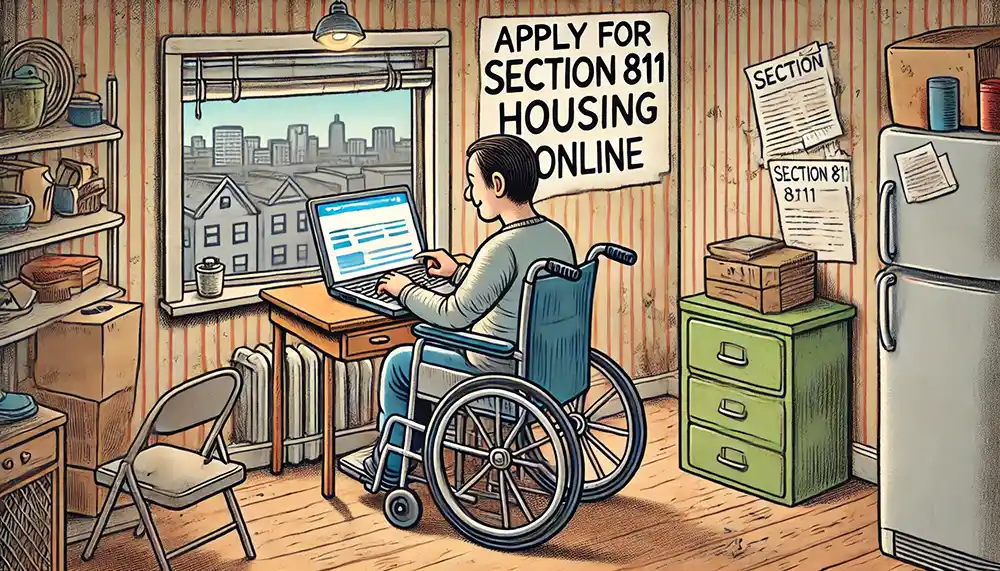

Section 811 is a government program aimed at enabling individuals with disabilities to attain greater independence. This supportive housing initiative offers affordable accommodation and facilitates access to essential services, allowing individuals to live autonomously and engage fully within their communities.
Who Qualifies for Section 811 Housing?
The eligibility criteria for Section 811 housing are as follows:
- Disability Requirement: At least one adult in the household must have a qualifying disability, which may encompass physical, developmental, or chronic mental conditions. Both singles and families without children can apply.
- Citizenship: Typically, individuals of any citizenship status can apply, unless specific program criteria dictate otherwise.
- Income Requirement: Household income should be below 50% of the Area Median Income, or less than 30% for properties developed after 2021.
- HUD Qualifications: Applicants must fulfill the HUD Rental Assistance Income Qualifications.
- Rental History: A satisfactory rental history is important, as previous landlords may be contacted for verification.
- Criminal Record: Candidates should not have a criminal record, as this can impede qualification for Section 811 housing.
- Accuracy: It’s essential to provide precise information throughout the application process.
How to Apply for Section 811 Housing
To get started with applying for the Section 811 supportive housing waiting list, here’s what you need to do:
- Find a Section 811 Apartment: Search for an apartment in your locality and reach out to the relevant contacts via phone or message. Applications can be submitted online, through the mail, or in person at the housing authority’s office; it’s advisable to use the preferred approach of your local housing office.
- Complete the Application Form: Be sure to include accurate details such as names, gender, date of birth, Social Security Number, income, and asset information for all household members. Your previous housing history may also be necessary.
- Submit Your Application: Adhere to the housing authority’s instructions meticulously to avoid disqualification.
What to Do After Applying for Section 811 Housing
- Processing Time: You can expect to wait one to two weeks for your application to be processed.
- Check Status: Confirm your position on the waiting list with the property manager. If you’re not on the list, arrangements can be made for moving into available housing.
- Waiting List: If you are on a waiting list, don’t hesitate to ask about the estimated waiting time for updates.
- Follow-Up: It’s a good practice to check in on your application status. For online applications, keep an eye out for emails and respond swiftly to demonstrate your ongoing interest.
- Final Steps: Once a unit becomes available, you will receive a call for an in-person eligibility interview with the landlord or property manager. After these steps are completed, you’ll be set to move into your new home.
Benefits of Section 811 Housing
Section 811 housing presents a myriad of advantages that go beyond providing affordable shelter. By encouraging independent living, it significantly improves the quality of life for individuals with disabilities. These housing options are generally situated in communities that offer access to transportation and healthcare services, which are essential for day-to-day living and overall health. Section 811 housing is instrumental in preventing homelessness among individuals with disabilities, providing stable and long-term accommodations.
Challenges and Considerations
While Section 811 offers vital support, it does face some challenges. There is a high demand for Section 811 housing, leading to extensive waiting lists. The application process can be quite complicated, requiring careful attention to meet all criteria. Additionally, finding suitable housing that accommodates the specific needs of individuals with disabilities can also be difficult. Despite these hurdles, Section 811 remains a crucial resource for many.
Section 811 FAQs
What is the Section 811 Voucher? The Section 811 voucher assists low-income tenants with disabilities by subsidizing a portion of their rent. This initiative stems from the Housing and Community Development Act of 1992. These vouchers, often referred to as “Mainstream vouchers,” are managed similarly to Section 8 vouchers. With a voucher, you can select a housing unit where the landlord agrees to participate in the program, with eligibility determined by low-income status and a need for safe, decent housing.
Are Section 8 and Section 811 the Same? Although both programs operate under the Department of Housing and Urban Development (HUD) and provide housing assistance, they cater to different populations. Section 8 focuses on subsidized housing for low-income tenants, while Section 811 specifically supports low-income individuals with disabilities.
What is a Section 811 Request? A Section 811 request, or Request for Tenancy Approval (RTA), is submitted to the housing authority when an applicant seeks permission to occupy a Section 811 housing unit. After submission, the Public Housing Agency (PHA) will contact the unit operator to arrange an inspection, usually within 15 days, and notify the tenants accordingly.
Additional Resources
For further details regarding Section 811 housing and other associated programs, you can explore the official HUD website. Local housing authorities also offer resources and assistance for applicants. Moreover, organizations like the National Council on Independent Living (NCIL) and the Consortium for Citizens with Disabilities (CCD) provide advocacy and support to individuals navigating the application process and living with disabilities.
Conclusion
Section 811 housing is pivotal in supporting individuals with disabilities, allowing them the opportunity to live independently in a safe and affordable setting. While challenges exist within the program, the advantages it offers in terms of stability and enriched quality of life are immeasurable. By grasping the eligibility requirements, application procedures, and available resources, individuals and families can better navigate the journey toward securing Section 811 housing. If you’re keen on staying informed about news related to Section 811 supportive housing for persons with disabilities, don’t forget to subscribe to our newsletter for the latest updates on Section 8 and Section 811 housing programs!
Finding your way through the Section 8 housing process can feel daunting, and that’s where Section 8 Search comes into play. We’re not merely a listing site; we’re a dedicated resource aimed at simplifying the process of finding housing under the Housing Choice Voucher Program. Our platform features user-friendly tools to help you explore listings and check waiting list statuses across the nation, all based on official HUD data. We are passionate about providing clear, valuable information and guidance to empower you with the knowledge necessary to understand eligibility, complete your application, and confidently manage your housing journey.