
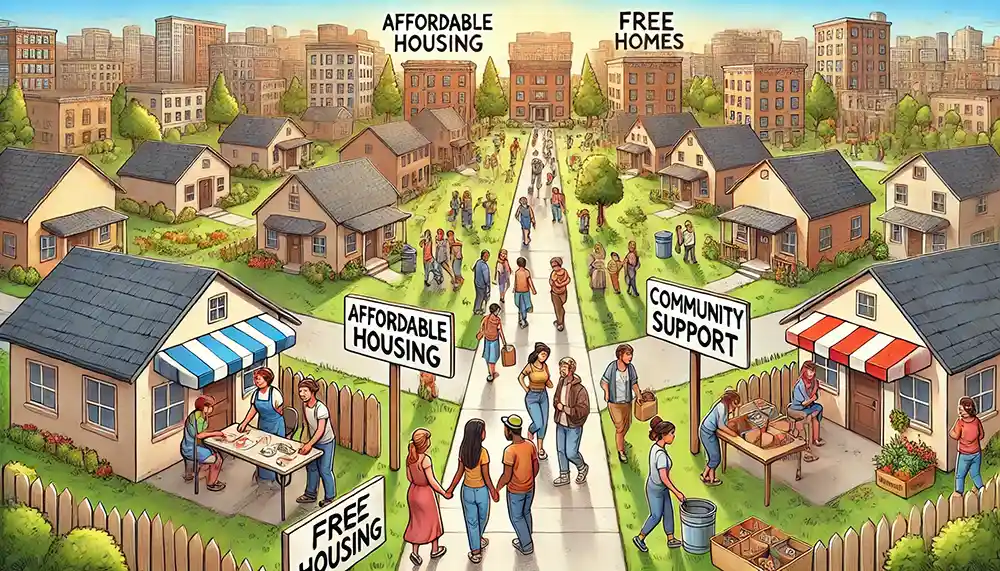

Affordable housing is a phrase that frequently comes up in discussions. But what does it truly entail? And how can you access it?
In basic terms, housing is deemed affordable when it costs no more than 30% of a household’s income. This encompasses both rent or mortgage payments as well as utilities.
Nonprofit organizations are vital in providing affordable housing solutions. They diligently work to tackle homelessness and housing instability, often stepping in where government initiatives may lack coverage.
Typically, they engage in the following activities:
- Develop and oversee affordable rental and homeownership prospects.
- Offer housing counseling and financial literacy programs.
- Advocate for equitable housing policies and funding opportunities.
- Provide essential services to aid individuals in maintaining housing security.
Grasping the role of nonprofits within the housing sector is an essential first step toward tapping into the resources they offer. With this understanding, you are better prepared to navigate the intricate housing landscape, helping you to find the best charity for housing assistance!
Top-Rated Nonprofits for Housing Assistance
Across the country, there are numerous nonprofits focused on delivering affordable housing options. Each organization has its own unique mission and strategy, but they all share a common purpose: ensuring that everyone has a safe and stable place to call home.
Here are some of the most esteemed nonprofits for housing assistance:
Family Promise
Overview: Family Promise is a national organization committed to assisting families experiencing homelessness in achieving sustainable independence. They operate in over 200 communities across 43 states, supported by a network of around 200,000 volunteers.
Services: Family Promise offers temporary housing, meals, and comprehensive services including case management and life skills training. They collaborate closely with local congregations to provide shelter and resources, aiding families in their transition to permanent housing.
Impact: Each year, Family Promise assists more than 125,000 individuals, a significant portion of whom secure permanent housing through the programs they offer.
How to Access: Families in need can connect with their local Family Promise affiliate for support. The organization’s website provides a directory of affiliates nationwide.
Covenant House
Overview: Covenant House is dedicated to offering shelter and support for homeless and trafficked youth. Established in 1972, it currently operates in 34 cities across six countries.
Services: Covenant House provides immediate shelter, food, medical care, and mental health support. Additionally, they offer long-term assistance, including educational programs, job training, and transitional housing options.
Impact: The organization serves over 2,000 young people each night and has aided more than 1.5 million youth since its founding. In 2022, they delivered 1.6 million meals and provided 730,000 nights of accommodation.
How to Access: Youth in need can reach out to Covenant House through their website or by visiting one of their crisis centers.
StandUp for Kids
Overview: StandUp for Kids is a national nonprofit focused on breaking the cycle of youth homelessness. They provide outreach services, housing solutions, and support programs for homeless and at-risk youth.
Services: StandUp for Kids conducts street outreach, mentoring, educational support, and housing help. They emphasize delivering life skills training and resources to enable youth to achieve self-sufficiency.
Impact: The organization operates in 18 cities across 11 states and, in 2021, distributed more than 22,000 meals while providing extensive support services to thousands of young individuals.
How to Access: Youth can connect with StandUp for Kids through local programs or via the organization’s website.
National Alliance to End Homelessness
Overview: Although not a direct service provider, the National Alliance to End Homelessness plays a vital role in advocating for policies and practices aimed at eliminating homelessness. They engage in research, offer training, and support local nonprofits in their missions.
Services: The Alliance concentrates on promoting best practices in housing and homelessness services, providing technical assistance, and advocating for federal policies that support housing stability.
Impact: The organization has been influential in shaping national policy and increasing funding for homeless services. They also provide a wealth of resources and toolkits for local agencies working to combat homelessness.
How to Access: While individuals cannot obtain direct services from the Alliance, they can benefit from the resources and referrals available on their website.
Global Refuge
Overview: Established in 1939, Global Refuge (formerly Lutheran Immigration and Refugee Service) assists immigrants and refugees, including those facing homelessness or the risk of it. They provide extensive support to ensure these vulnerable communities secure stable housing and integrate into their new environments.
Services: Global Refuge offers resettlement services, housing assistance, and legal aid. They emphasize protecting the most vulnerable, including children and families, and provide specialized support for foster children and assistance with family reunifications.
Impact: Since their inception, Global Refuge has supported over 500,000 immigrants and operates in more than 15 states. In 2019 alone, they resettled over 3,800 refugees and facilitated more than 2,400 family reunifications.
How to Access: Individuals can access services through local offices or by visiting the website for more information on available programs in their area.
The Role of Housing Charities in Combating Homelessness
Housing charities play an essential role in fighting homelessness. They provide immediate shelter for individuals in crisis, often through emergency housing or transitional accommodations.
Beyond addressing immediate needs, these charities also focus on long-term solutions. They assist individuals and families in securing stable, affordable housing, which may involve financial support, advocacy, or directly providing housing options.
Many housing charities also offer additional support services. These services could include mental health support, job training, and life skills education—essentially addressing the core issues that contribute to homelessness.
Housing charities are also pivotal in…
A substantial role in policy advocacy is played by housing charities. They strive to influence laws and regulations that impact housing affordability and homelessness.
Essentially, housing charities are at the forefront of the effort against homelessness. They provide both immediate assistance and long-term solutions, making them invaluable to our communities.
Finding Affordable Rentals Through Nonprofits
Nonprofits are instrumental in offering affordable rental options. They frequently own and manage rental properties, providing them at lower rates for those in need. With government Section 8 and HCV programs currently experiencing delays, seeking out a nonprofit for housing is one of the most effective ways to secure living arrangements!
To qualify for these rentals, individuals typically need to meet specific eligibility requirements. These may include income limits, family size, and other considerations. Each nonprofit has its own unique criteria.
Here are some steps to secure affordable rentals through nonprofits:
- Identify local nonprofits that offer affordable rental properties.
- Understand the eligibility requirements for each nonprofit.
- Gather necessary documentation, such as income verification.
- Submit an application for the rental program.
- Follow up regularly and promptly respond to any requests for additional information.
Keep in mind, patience and persistence are essential. While the process may take some time, the outcome—a safe, affordable home—is well worth the effort.
Exploring Affordable Housing Options
Affordable housing options are varied and abundant, yet navigating them can be complex. Grasping the different types of affordable housing is the first crucial step.
Common alternatives include public housing, Section 8 vouchers, and low-income housing tax credits. Each of these options has its own eligibility criteria and application process, making thorough research important.
Here are some steps to explore affordable housing options:
- Identify the types of affordable housing available in your local area.
- Familiarize yourself with the eligibility requirements for each type.
- Collect necessary documentation, including income verification and proof of residency.
- Apply for the housing program that aligns best with your needs.
- Follow up consistently and respond quickly to any requests for additional information.
Nonprofits often offer housing counseling services to assist individuals in navigating these opportunities. They can provide invaluable guidance and support along the way. Don’t hesitate to seek assistance.
The Importance of Accessible Homes in Community Life
Accessible homes are a vital component of any community. They enable individuals with disabilities and the elderly to enjoy greater independence, significantly enhancing their quality of life.
Moreover, accessible homes can promote inclusivity within a community, ensuring that everyone, regardless of physical abilities, can fully engage in community life.
Nonprofits play an essential role in advocating for and providing accessible homes. They collaborate with builders, landlords, and local governments to ensure housing complies with accessibility standards.
In addition, these organizations frequently offer resources and support to individuals seeking accessible housing. This can encompass assistance in locating suitable housing and navigating the necessary paperwork. It’s even been shown that affordable housing contributes to creating safer and happier communities!
Addressing the Emotional Challenges of Housing Instability
Housing instability can impose a significant emotional burden, causing stress and uncertainty that may lead to fear and anxiety.
Nonprofits recognize this emotional aspect and go beyond merely offering physical housing solutions. They provide emotional support and counseling services to help individuals cope with their situations.
These services can act as a lifeline for those facing housing instability. They create a welcoming environment to express anxieties and foster hope for the future.
Ultimately, addressing the emotional challenges linked to housing instability is a vital aspect of the work carried out by housing nonprofits.
Resources and Tools for Social Workers and Their Clients
Housing nonprofits boast a vast array of resources and tools to assist both social workers and clients.
For social workers, these resources may include directories of affordable housing options and training materials tailored for navigating complex housing systems.
Clients can access resources such as financial education materials to help prepare them for potential homeownership and personalized housing plans that cater to their unique needs.
Consider the following resources:
- Directories of affordable housing options
- Training materials for navigating housing systems
- Financial education resources
- Tailored housing plans
- Legal assistance resources
These resources empower social workers and clients alike, equipping them with the knowledge and tools necessary to navigate the intricate landscape of affordable housing.
Advocacy and Policy: A Broader Perspective on Affordable Housing
Advocacy and policy initiatives are crucial in the realm of affordable housing. Nonprofits actively engage in these efforts to sway housing laws and funding decisions.
They advocate for policies aimed at increasing accessible housing options and champion the rights of low-income families and individuals.
Additionally, nonprofits work to raise public awareness about housing challenges through community outreach and media campaigns.
In summary, advocacy and policy initiatives play a significant role in shaping the broader landscape of affordable housing, ensuring that the voices of those most affected by housing instability are acknowledged and taken into account.